A forklift that is serviced on schedule breaks down less, lasts longer and is worth more when you sell it. The schedule below is a sensible baseline. Your operator’s manual sets the exact intervals for your model, and it always wins over a general guide.
Every shift: the pre-use inspection
In British Columbia, WorkSafeBC’s OHS Regulation (section 16.3) requires mobile equipment to be inspected before it is first used on a shift, and unsafe equipment must not be used until it is fixed. Alberta’s OHS rules similarly expect equipment to be kept in safe working order. A good daily check takes five minutes:
- Walk around: leaks under the truck, damaged forks, loose or missing parts.
- Tires: damage, chunking, low pressure on pneumatic tires.
- Forks and chains: cracks, bent tips, slack or damaged chains.
- Fluids: engine oil, coolant and hydraulic oil (internal-combustion trucks), or battery charge and connectors (electric).
- Controls: horn, lights, backup alarm, seat belt, steering, service and parking brakes.
- Lift, lower and tilt once without a load to make sure everything moves smoothly.
Record the check and report problems. A written log also helps when you sell or trade the truck.
Planned maintenance by hours
Most manufacturers set planned maintenance by hour meter, commonly around every 200 to 250 hours, or every few months for lightly used trucks. A typical service covers:
- Engine oil and filter, air filter and fuel system (propane and diesel).
- Greasing the mast, chains, steering and pivot points.
- Checking chain wear and adjustment.
- Hydraulic oil level and condition, hoses and fittings.
- Brake adjustment and wear.
- Electrical connections, contactors and motor brushes (electric trucks).
Longer intervals, often around 1,000 and 2,000 hours, add hydraulic oil and filter changes, transmission fluid, coolant and a more thorough inspection of the mast and drive train.
Battery care for electric trucks
- Charge lead-acid batteries fully rather than in short top-ups, and avoid running them flat.
- Top up water after charging, not before, using distilled or deionised water.
- Keep the top of the battery clean and dry to prevent corrosion.
- Lithium batteries need no watering, but keep connectors clean and follow the charger maker’s instructions.
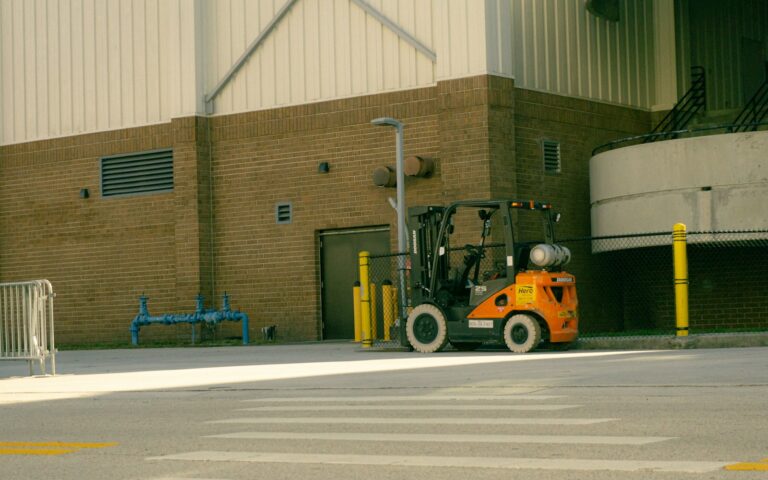
Propane system checks
- Inspect the cylinder, collar and mounting bracket every time you change tanks.
- Check the hose and quick-connect for cracks and leaks.
- Have the regulator and fuel system inspected at planned services.
Once a year
At least annually, have the truck inspected by a qualified technician. Forks in particular should be examined at least every 12 months, more often on hard-working trucks, for heel wear, cracks and straightness.
Signs it needs attention now
- Mast drifts down under load, or moves in jerks.
- New noises from the drive, mast or steering.
- Oil spots where the truck parks.
- Battery that no longer lasts a shift.
- Hard starting or heavy smoke.
Service and parts in Greater Vancouver
Wanshing technicians handle planned maintenance and repairs across Greater Vancouver; see our forklift service page to book. For filters, tires, forks and other wear items, our forklift parts team in Richmond can help you find the right part.