Power type is the first decision when you spec a forklift, and it is mostly decided by where the truck works. Here is how the three common options compare.
The short version
- Electric: best indoors, quiet, no exhaust, lowest running cost. Higher purchase price.
- Propane (LPG): the all-rounder. Indoors with ventilation and outdoors, refuels in minutes by swapping a cylinder.
- Diesel: outdoor heavy work, rough ground and high capacities. Not for enclosed spaces.
Electric forklifts
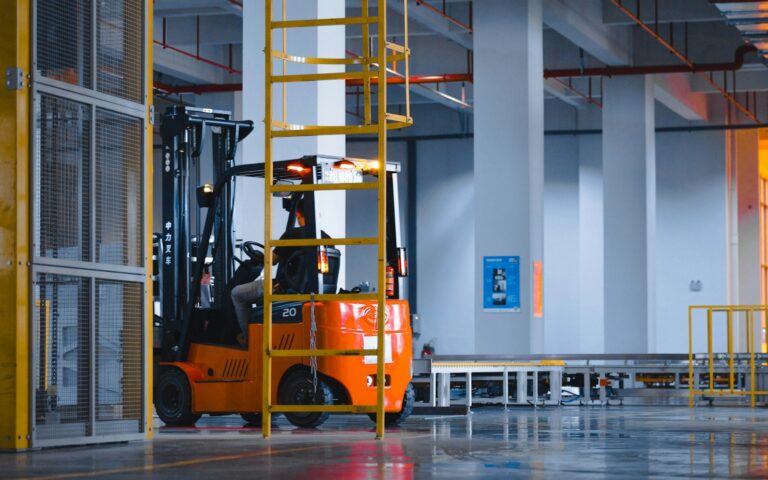
Electric trucks produce no exhaust at the point of use and are much quieter, so they are the default for warehouses, food handling and anywhere people work close to the truck. They have fewer moving parts than an engine: no oil changes, spark plugs or coolant. The trade-off is up-front cost and charging. A lead-acid battery typically needs a full charge and cool-down per shift, while lithium-ion can be opportunity-charged on breaks and needs no watering, but costs more.
Modern electric trucks handle outdoor work on hard surfaces in dry weather well. They are less suited to gravel, steep ramps and long days on rough ground.
Propane forklifts
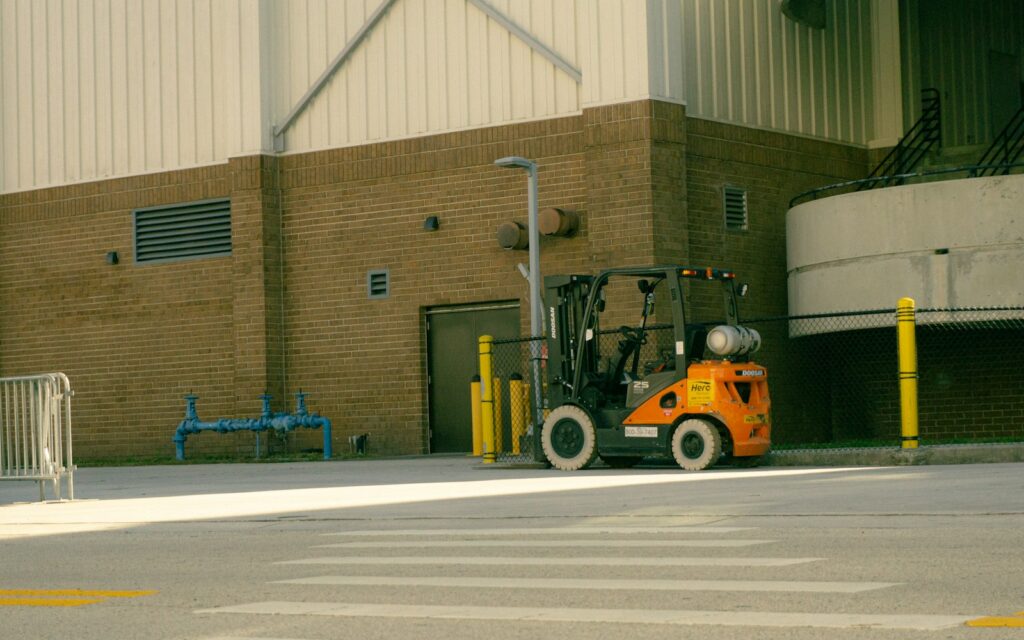
Propane trucks are generally cheaper to buy than comparable electrics. Ritchie Bros. puts new propane units at about $20,000 to $35,000 against $25,000 to $45,000 for electrics of similar capacity. Swapping a cylinder takes a few minutes, so a propane truck can run multiple shifts without waiting on a charger. They work indoors where there is adequate ventilation, and outdoors in any season.
Running costs are higher than electric: fuel prices move, and the engine needs regular maintenance. You also need safe storage for spare cylinders.
Diesel forklifts
Diesel is the choice for lumber yards, construction, heavy steel and other outdoor work with big loads. Diesel engines deliver strong torque for climbing grades and pushing through gravel, and high-capacity trucks are most often diesel. Exhaust and noise rule them out for indoor work.
Rough ground: tires matter as much as fuel
For dirt, gravel or broken asphalt, choose pneumatic or solid pneumatic tires and enough ground clearance, whatever the power type. A cushion-tire truck will struggle on gravel no matter what drives it.
Cold weather
In an Edmonton winter, every power type needs attention. Lead-acid batteries lose usable capacity in the cold, and lithium batteries for cold use should have built-in heating. Propane and diesel trucks start more reliably with block heaters, and diesel needs a winter fuel blend. If the truck works outside all winter, a cab with a heater makes a big difference to the operator.
How to choose
| Your situation | Usually the best fit |
|---|---|
| Indoor warehouse, one or two shifts | Electric |
| Indoor and outdoor, hard surfaces, multiple shifts | Propane |
| Food, cold storage, close to people | Electric (lithium for cold rooms) |
| Yard, gravel, heavy loads all day | Diesel or propane with pneumatic tires |
Our new forklifts include electric and propane JAC models in common capacities, and our forklifts for sale page lets you compare new and used units side by side. If you are still weighing price, our guide to forklift costs covers what each option adds.